If you’ve been following along with my blog posts, you may have read my blog about Occupational therapy and where you might find us (click here to read).
I have reached out to some friends and colleagues to help share their roles and scope of practices in the occupational therapy profession. My hope is that people will be able to read, learn and share about occupational therapy so that more people will be able to seek out services if it would benefit them and for students and other OTs to see what is out there!
Today, we’re diving into one of my favourite roles: nature based practice!! I may be bias because this is the area that captured my heart after almost quitting OT school after my first placement really traumatized me, and I’ve also worked in nature since 2021 🥰
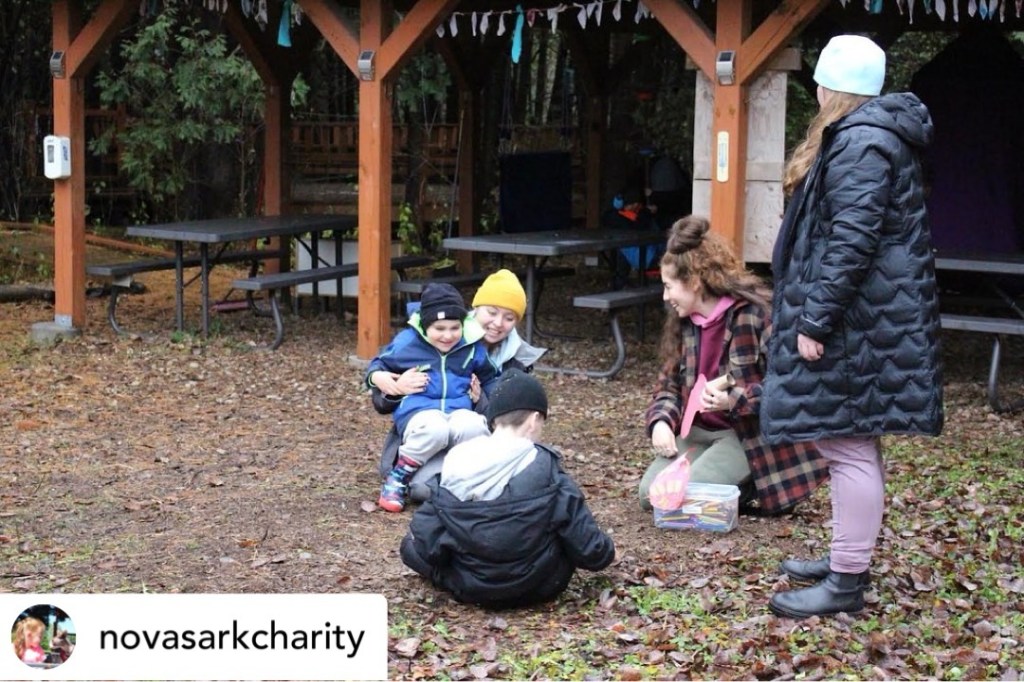
What is Nature based practice?
If you look up “Nature based therapy”, you may get information about a wide variety of things. Nature therapy is sometimes called ecotherapy, which is the practice of being in nature to boost growth and healing, especially around mental health. You might read about adventure therapy, which is often outdoors as well, and is the use of adventure experiences provided by mental health professionals. You can read about Shinrin-yoku, which is the Japanese practice of “forest bathing” or “taking in the forest atmosphere”. You may hear about horticultural therapy which is the use of gardening as a therapeutic medium.
It’s a big world out there when you start researching, but at the very core of nature based practice, you are using nature within your therapeutic interventions! As an Occupational therapist, because our field is so broad and we work on so many different physical, social, cognitive, emotional and mental health goals, our “nature based practice” may look extremely different for everyone!
When I am working with nature, I am using nature as an environment, a tool and a co-therapist. Nature therapy doesn’t necessarily mean that you are spending your whole time with your client outside each session. There is research that shows that even having some sort of integration with nature when inside, can still provide benefits! Bringing nature inside, through potted plants, nature as a material in crafts, watching waterfalls/nature videos and sounds in the background, can bring you some of the benefits such as improving your mood, reducing feelings of anger or stress, helping you feel more relaxed and feel more connected to nature. It’s important to remember that being outdoors is NOT for everyone! Being able to connect inside with nature can be key for many; for some it is uncomfortable to be too cold or too hot, and this can take away from their focus in a session. For some individuals depending on their locations, sex, backgrounds etc they may not feel safe being outdoors and the increased vulnerability may be too much for them to engage in a therapeutic session. For some, they may not have access to a lovely space that they want to be outside in! Getting creative is the name of the game in nature therapy 🙂
As an environment, sometimes just taking your clients out into nature can provide a different environment and more calm to the session overall. I love bringing typical crafts, books, and activities into the outdoor environment to see how there may be changes in energy for my clients. Sometimes even just the environment outside of 4 walls can bring calm when you are having a talk therapy style session with a client. Some of my best therapeutic conversations have happened on walks around a neighbourhood or around the property that I work on typically. The lack of pressure to make eye contact, to feel like you can look at other things and hear natural sounds can help relax into a challenging conversation. The natural environment also provides natural challenges!
I like to consider the natural challenges of the environment as my co-therapist. For example, when I work with my pediatric groups, I like to put out crafts and different activities, and then watch the natural environment help grow these activities. A great example of this is if I’m trying to work on physical strength and coordination, turn taking and problem solving through an obstacle course. After building my own obstacle course, I give the kids the option to modify it to make it better after they try it once. Depending on the sticks, locks, rocks etc that are around, sometimes this can provide the resources and imagination to foster their creativity and provide challenges I couldn’t imagine! Working through challenges that nature, my co-therapist, facilitates also allows me to work WITH my client to problem solve vs them working against me. For example, if we had a plan for a session and then it starts to rain, that is a perfect opportunity for my client to need to regulate their emotions of disappointment or frustration, problem solve what to do next and perhaps become creative and make the most out of the weather! Finding positives in a challenging situation is also an important practice for our mental health, and when the challenges are not created by the therapist, sometimes it is easier to work through!
Nature can also provide tools for our clients to learn and explore with. Some of my kids find extreme pride and joy in sharing their knowledge about something in nature, or find natural social connections while sharing their findings with other children. Nature can be a tool for crafts, arts, sports and games as well. Making things using tree branches, painting on rocks, picking bouquets of flowers and using them as paintbrushes can add a sensory component to a session that perhaps wouldn’t be there if we were indoors using man made creations! I know some OTs that use edible nature pieces to explore hesitancy around eating, or to foster interest in handwriting practice!
Truly, the ways that nature can be incorporated into practice can be absolutely endless depending on the angle that you want to approach it! I am constantly learning and growing my ways to incorporate nature into my practice, and even after 4 years of practice I can’t just give one explanation of nature therapy because it changes every single day!
I’ve been very lucky in finding a large group of incredible Occupational therapists who bring their work with clients out in nature, and have been able to collaborate a lot on different ideas and ways to improve our practices. The post is written with input by one of these lovely individuals; Angela Rosenburg. If you’d like to read more about my adventures learning with them, check out this blog I wrote in August! And now, please enjoy 🙂

Angela’s story; getting started in nature therapy
In early 2018 I happened to listen to a podcast that discussed the book “Balanced and Barefoot” by Angela Hanscom. I was immediately curious and not only did I read that book (quickly) I went down the rabbit hole and started to read LOTS books (“How to Raise a Wild Child”; “Last Child in the Woods”; & “Free to Learn”). I was initially motivated because of my own parenting journey (my kids were age 2, 5, & 8 at the time) and I wanted to learn and do better for my own kids and the kids in my community. Simultaneously I was a little burnt out in my professional work, longing for a pivot that would serve my clients and their families with more meaning, effect, and connection. So when I was unable to find ANY outdoor, play-based, child-led opportunities for my kids in all of Central Florida (in 2018) – I took the leap, quit my job, and launched Treeline Enrichment February 2019 … initially only offering forest play enrichment programs as a licensed TimberNook Provider. I actually stepped away from skilled therapy services for about 6 months and it was really powerful for my growth as a professional, pausing to reconnect with play, nature, and childhood joy.
But I was also acutely aware that some children were struggling, even in the context of a grand, sensory-motor, child led forest play program like TimberNook. One child that longed for social connections but responded by biting whenever he was happy or frustrated. One child that experienced big deep emotions whenever her hands or clothes got dirty. One child wanted to follow his curiosities deep into the forest so much so that he was unable to tune into established boundaries or directions resulting in significant safety risks. Or one child that threw materials and his personal belongings anytime something felt unexpected to him, such as not being first, mom packing strawberries when he thought he was getting blueberries, or the play mud kitchen water got used by someone else. Many, many, many children make huge gains in their development through forest play enrichment programs, like TimberNook, but sometimes it’s not enough and a child needs more, skilled support to thrive. I had over 15 years of experience as a pediatric occupational therapist → I knew how to help these kids!
So in January of 2020, I began to offer small group occupational therapy services and in May of that same year, I added individual OT services. By adding occupational therapy services outdoors, Treeline was and is able to offer a full continuum of programs & services for kids individually (OT), in small groups (OT), or in large groups (TimberNook – not OT), helping kids become more strong, confident, and resilient for success throughout life.
What is the benefit of being out in nature with your clients?
There are tons of benefits of taking occupational therapy sessions outdoors, but 3 of Angela’s favourites are:
- Nature is unpredictable. Developing resilience, flexibility, adaptability, and problem solving skills for relationships, school, play, and life is not easy. Outdoors the weather changes, trees fall, plants (and animals) die, risks arise, and discoveries are unknown. Every occupational therapy session outdoors is going to be different. But you know what? I (the therapist) didn’t make it rain, make the moss grow, or move the red ants to our favorite play spot. I don’t even know what we will discover in our session. But I (the therapist) can journey with my client through these unpredictable changes, using co-regulation and through a sensory-relationship lens to support a widening of the child’s capacity to respond and adapt … not only outdoors but to other unpredictable or unexpected circumstances in life.
- Nature is available. I love pediatric therapy clinics – especially the big, dynamic sensory gyms. They are so fun and so powerful and are a great match for many kids. It’s a place you go for a therapy session that lasts 30-60 minutes and the equipment is expensive (but oh so beautiful). On the flip side, nature is just outside your door and parks are readily available in most communities. What’s my favorite and most used therapy tool in my backpack? A $30 hammock from Amazon. I hang swings from tree branches; gather pine needles, sand, or leaves to crash into; roll or slide down hills; climb logs, trees, and stumps; and haul water, sticks, and dirt. My “sensory gym” might not look like the clinic, but it is dynamic, powerful, and available for both my therapy sessions and our families to continue to explore throughout their week (and life)!
- Nature is rich. It’s wild (pun intended) how well nature provides for our well being as humans. In all it’s richness, nature truly is generous in its ways to help us be our best when we are available and open to receive. I have found tremendous opportunities to work towards a wide range of skills outdoors with clients ….fine motor, gross motor, sensory processing, emotional regulation, executive functioning, social engagements, play skills, confidence, self-awareness, visual motor, visual perceptual, self-care skills, feeding skills, and even toileting.
Angela’s favourite books to share:
- Balanced and Barefoot by Angela Hanscom for parents & therapists
- Nature Based Therapy by Harper, Rose, & Segal for therapists
- Free to Learn by Peter Gray (chapters 1+2 particularly) for therapists
- It’s Okay Not to Share by Heather Schumakre for therapists and parents
- No Such Thing as Bad Weather by McGurk for parents
- Nature-Based Allied Health Practice by Wagenfeld and Marder for therapists
Social Media Accounts Angela Recommends You Check Out for More on NB Therapy:
- Nature Based Therapists on Instagram
- Eco-Sensory Therapy on Instagram
- Nature Superheroes on Instagram
- Contigo Approach on Instagram
- NatureOTs on Facebook
Tips for students or OTs looking to get into nature practice!
I’m sure this is the information many of you are interested in reading about! Nature based settings for OT practice are pretty fantastic, but it’s not the right fit for every therapist! Additionally, nature based therapy is a specialty area that layers on additional theories and skills to our work beyond what is taught in school (yup, continue to pile on the learning!) As you explore nature based therapy as a speciality area for yourself, here are three things to consider:
- Stay grounded that you are first and foremost an occupational therapist. Work hard to learn and grow in that content, work, and skill. When you graduate OT school, you are just barely scratching the surface of knowledge. Embrace your need for continued learning, ask a lot of questions, take great continuing education courses (yes, you have to continue to invest in your learning), and stay humble.
- In nature based therapy, you are often working solo without much direct contact with other therapists, so be sure that you are working with a mentor to grow your clinical reasoning and practice skills. Even if you have been working for a few years – mentoring is going to be essential as you pivot to nature based therapy.
- It’s okay NOT to start your journey fully outdoors yet. You can still explore, learn, and integrate nature-based therapy philosophies into your work. You can bring items from the outdoors inside, you can set up your client to work with you near a window, you can recommend home program activities that take place outside, and you can explore ways to access the patios, yards, breezeways, and more of the buildings you work in.

If you’d like to connect with Angela :
Angela Rosenburg, OTD, OTR/L
Owner, Treeline Enrichment
@TreelineEnrichment on socials
If you have any questions further about nature based practice, about Occupational therapy, or if you have experiences you would like to share, please feel free to reach out through my Contact page, or leave a comment below! I have decided that I will continue to make changes to these posts, so if you think I’m missing anything or would like to share your personal experience within nature based practice, send me a blurb to add! Feel free to also comment if you’re a nature based practitioner outside of the OT field!
 Be Your Own Sunshine
This was such a thoughtful and inspiring post! I love how you described nature as a “co-therapist”, it really highlights how powerful and dynamic outdoor environments can be in supporting growth and healing. Angela’s journey was also so motivating and shows the impact of reconnecting with play and nature.
It’s interesting how this idea of creating supportive, calming environments applies across fields, even when people look for services like dental filling vancouver, they often value comfort and a more holistic experience.
Thanks for sharing such valuable insights into nature-based occupational therapy!
LikeLike
I love this insight thank you so much! I definitely find myself looking for practitioners including dentists who have a practice that makes me feel safe and acknowledged especially with the anxiety I have. It’s lovely to hear that there are places out there in other fields that value the same !
LikeLike