When completing your masters, in occupational therapy, a lot of the things you learn are very black-and-white. I remember sitting in a classroom and learning about standardized assessments, and how you had to stick exactly to the script that was given. We practiced on each other and reflected on how to best administer the assessment. In my second placement during the masters degree, I worked at a facility where there were a variety of different clients with many different diagnoses with a majority of them being neurodiverse. I remember learning so many different ways to engage kids in different activities and thinking that it would be really hard to use a standardized assessment with this population.
Fast forward coming into my fifth year of practicing as an Occupational therapist. I worked for 4 years in that neurodiverse day program I did my placement at and am now running my own private practice with a focus on kids and adults who are neurodiverse. In that time I have come to realize that standardized assessments and formal assessment questionnaires are not always a good fit for clients, especially neurodiverse individuals. It is hard to use a standardized assessment on a population that was not considered in it’s creation. However, there are many ways to use assessments that have already been created to help inform your clinical reasoning and support with education and interventions when working with the Neurodiverse population.
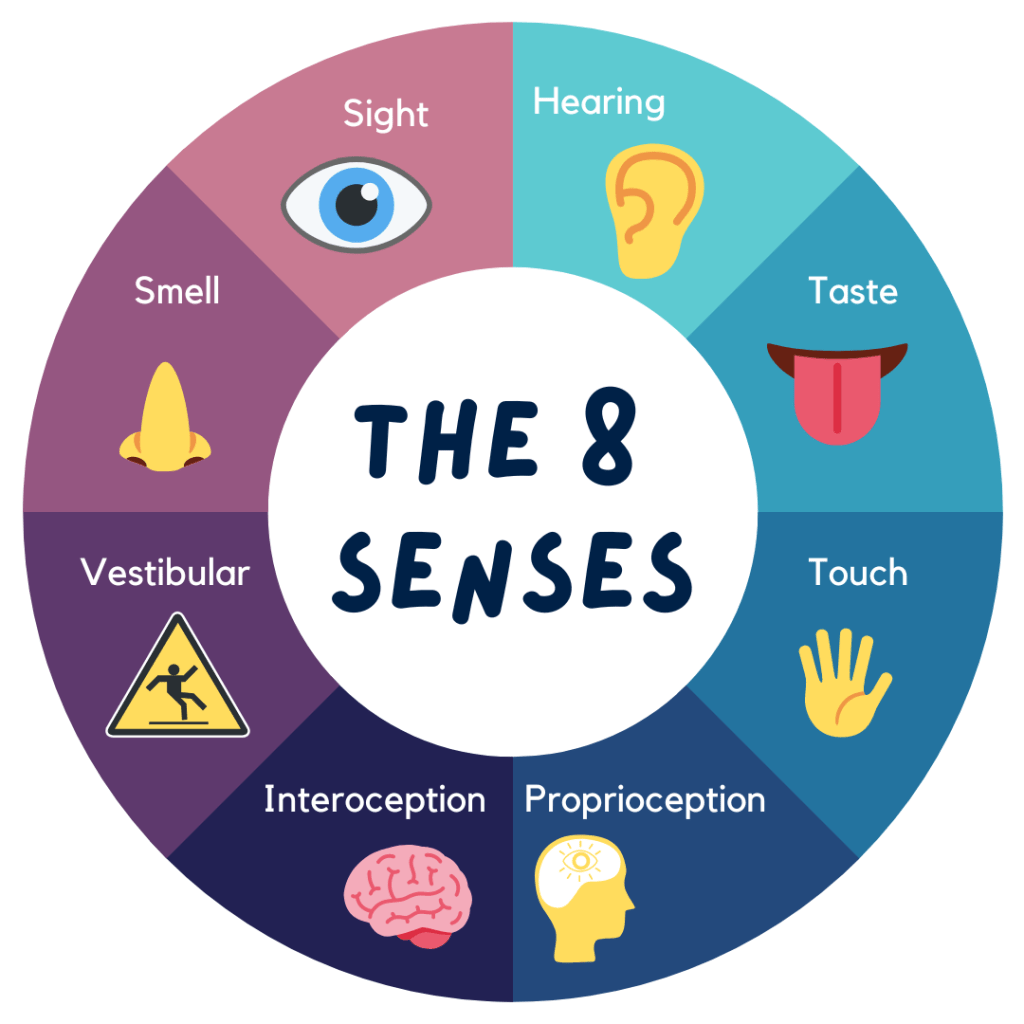
If you are unfamiliar with sensory processing disorder, it is basically the body having a hard time processing sensory information, which can affect many of our daily functions. The body has five primary senses including touch, sight, sound, taste, and smell. Occupational therapists like to also talk about the three additional senses – proprioception, vestibular and interoception. These three senses affect our bodies’ natural sense of head movement in space and balance, the sensation our muscles and joints give us, and the sensations that our organs’ natural sensors give us3. Each of these senses helps you with interacting and understanding the world around you.
For someone with a sensory processing disorder, their nervous system does not function in the same way that “typically” it should, and sensory stimuli can overwhelm or underwhelm the system. Challenges with sensory processing can often lead to challenges with child development and behaviour. Something to keep in mind if you are someone that does not experience sensory challenges in this way, is that sensory processing is NOT the same as sensory choices/preferences. Someone who is wearing headphones in public is not choosing to disengage or ignore you, but their tolerance to sound may actually be so low that it affects their physical wellbeing, attention, cognitive fatigue etc. Now that I am working with some adult clients who are able to verbalize their experiences, I hear often that overwhelming sensory experiences can cause major anxiety, physical pain and cognitive fatigue. Someone who can’t wear a certain fabric because of their experiences with texture is not being picky, it’s that the feeling gives them a physical discomfort that they can’t work through.
The Sensory Profile Assessment is one of the standardized assessments that I do use with my clients, both kids and adults. It is a self reported questionnaire, that I would either send to the client/client’s family or fill out with them, asking questions about their experiences with sensory input. This is not a diagnostic test, which means you aren’t getting a label coming out of this assessment, you are simply being pointed towards what kind of sensory experiences you may be having. This is something that helps us in occupational therapy sessions to explore what may be contributing to challenges in participation of daily activities and what strategies we can put in place to support you.
I often find going through the questions to be validating for the client or their family, as well as educational. Often times my neurodiverse clients won’t recognize that there is a sensory challenge, because this is not an average topic of conversation, and sensory strategies aren’t normalized enough yet in the community. No one teaches you that if you are feeling exhausted and headachy after shopping at a big mall, it might be because you have sensitivity to light or because your brain is struggling to navigate all the sounds in the space. Instead we just think we’re tired or if we say it’s too loud we might be seen as overly sensitive or dramatic. The questions in the Sensory Profile help reflect on what kind of things may be bothering you to the point of cognitive fatigue, physical exhaustion/pain or complete avoidance of certain objects, environments or situations.
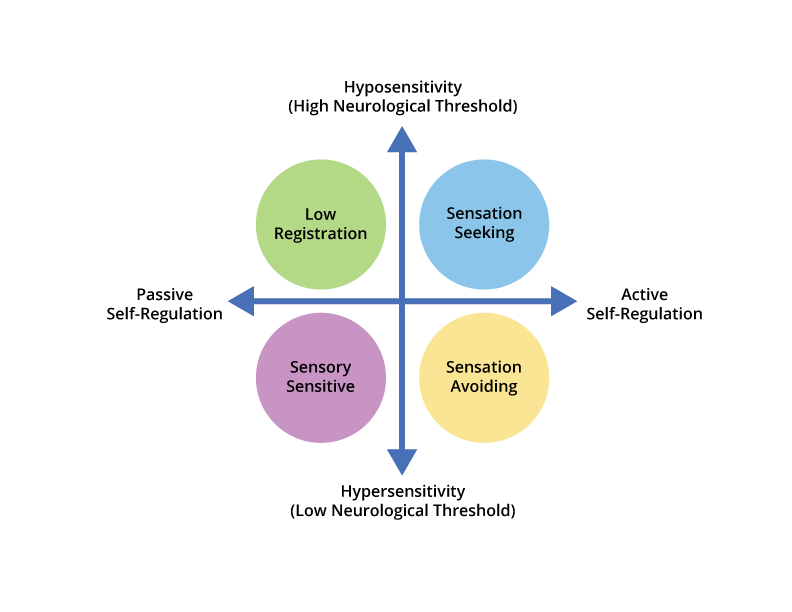
If you are doing a Sensory profile, it is also important to note that the results of the profile aren’t going to immediately change your world, but there are benefits to them. By knowing if you are in the categories of sensory seeking, sensory avoidant, sensory sensitive or low registration, you can use this to work with your therapist to explore what environments or activities may be challenging for you and what strategies you can use to access these again. You may be able to add language to your vocabulary to advocate for yourself to others – perhaps being able to share that you are very sensory sensitive so you need to wear a hat and sunglasses in bright malls and headphones in the grocery store. I have also used this as support to advocate for systemic supports such as accommodations for students in school or for employees at work.
Getting creative as a neurodiverse person or a neurodiverse affirming therapist can be extra work compared to other people’s experiences, but with some practice you can start making changes that are beneficial. Get creative, we got this – neurodiversity means you are different, not less.

